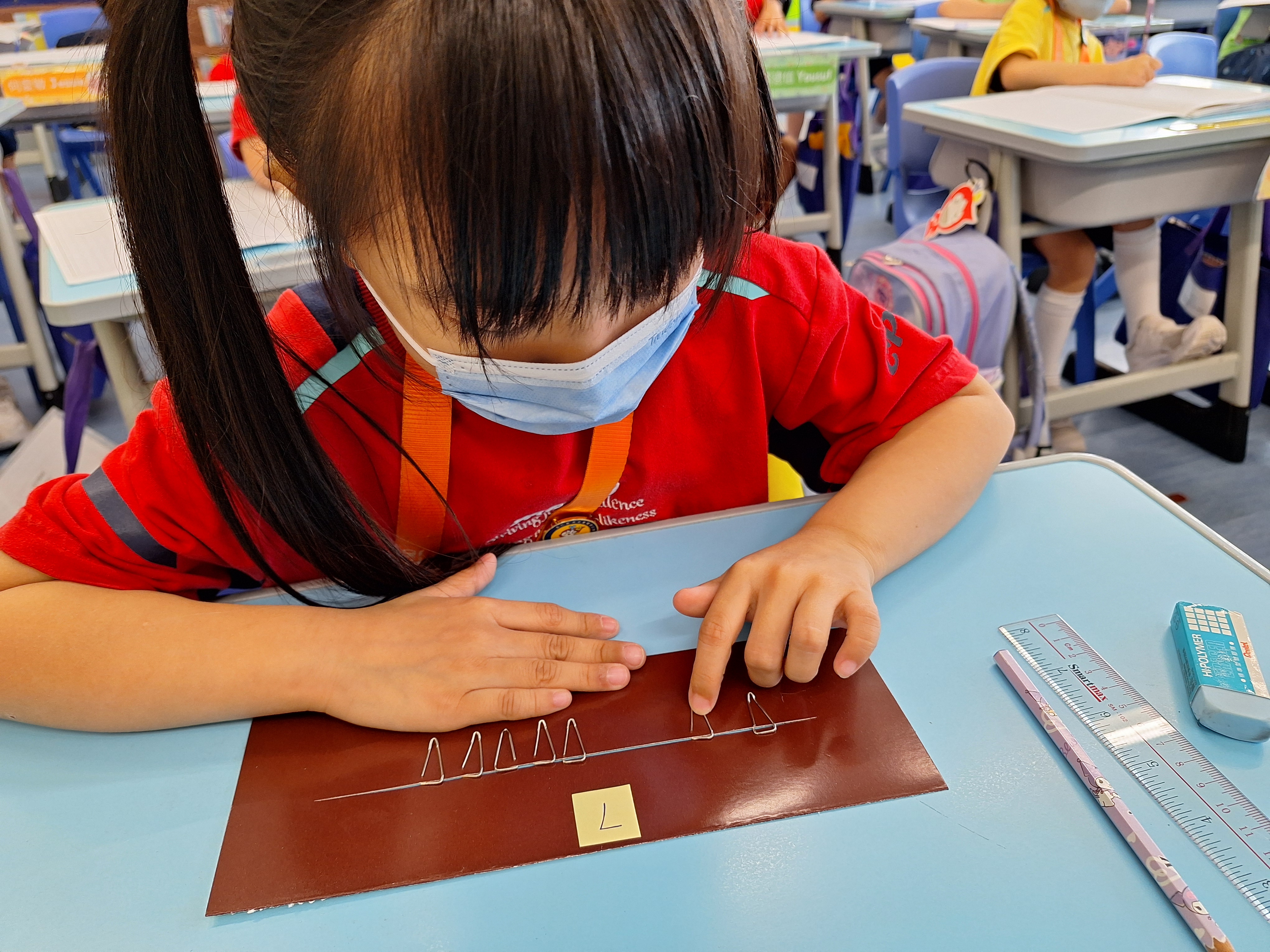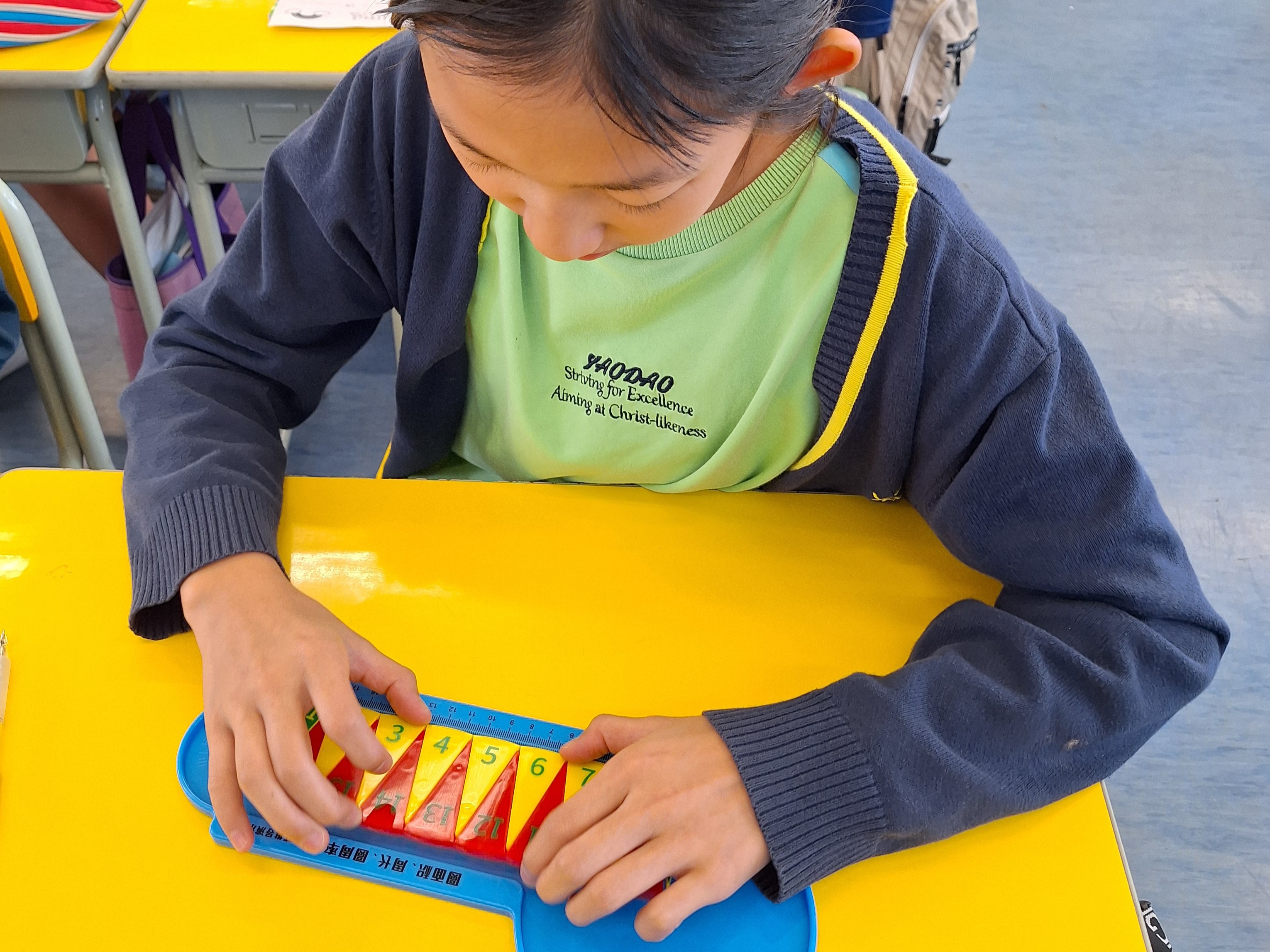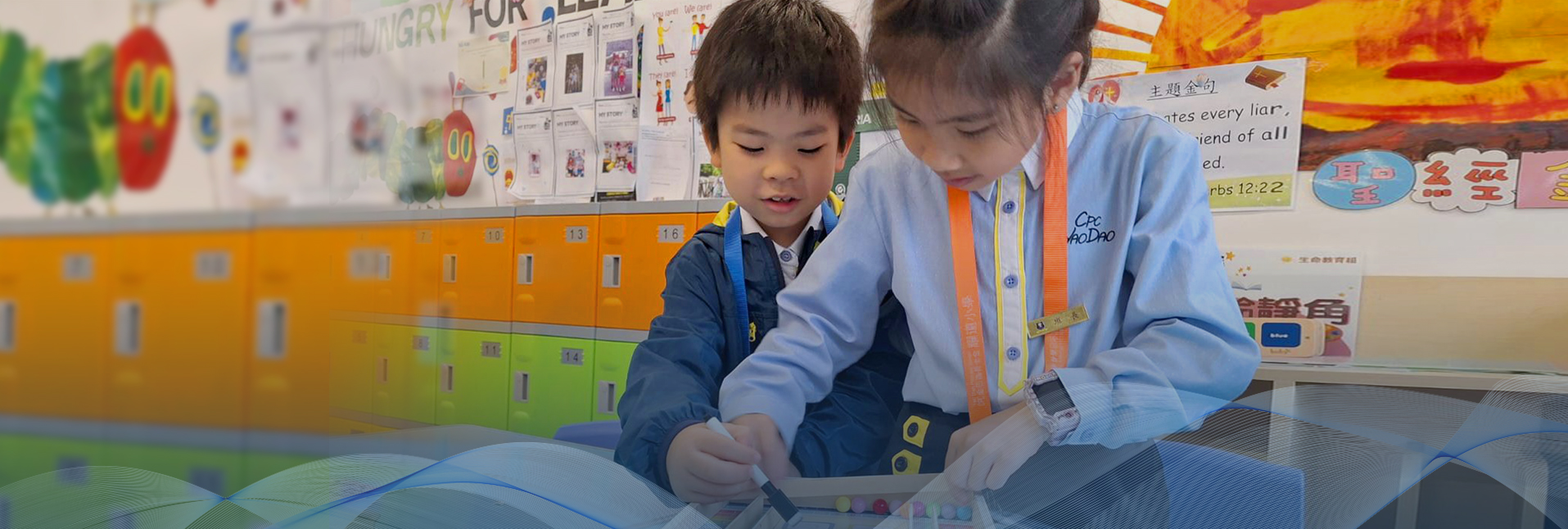
Our school's mathematics lessons are conducted using the ELPS learning model. This model, based on the theories of British mathematics educator Pamela Liebeck, suggests that children learn mathematics through four sequential stages: Experience (E), Language (L), Picture (P), and Symbol (S).
Learning Process:
|
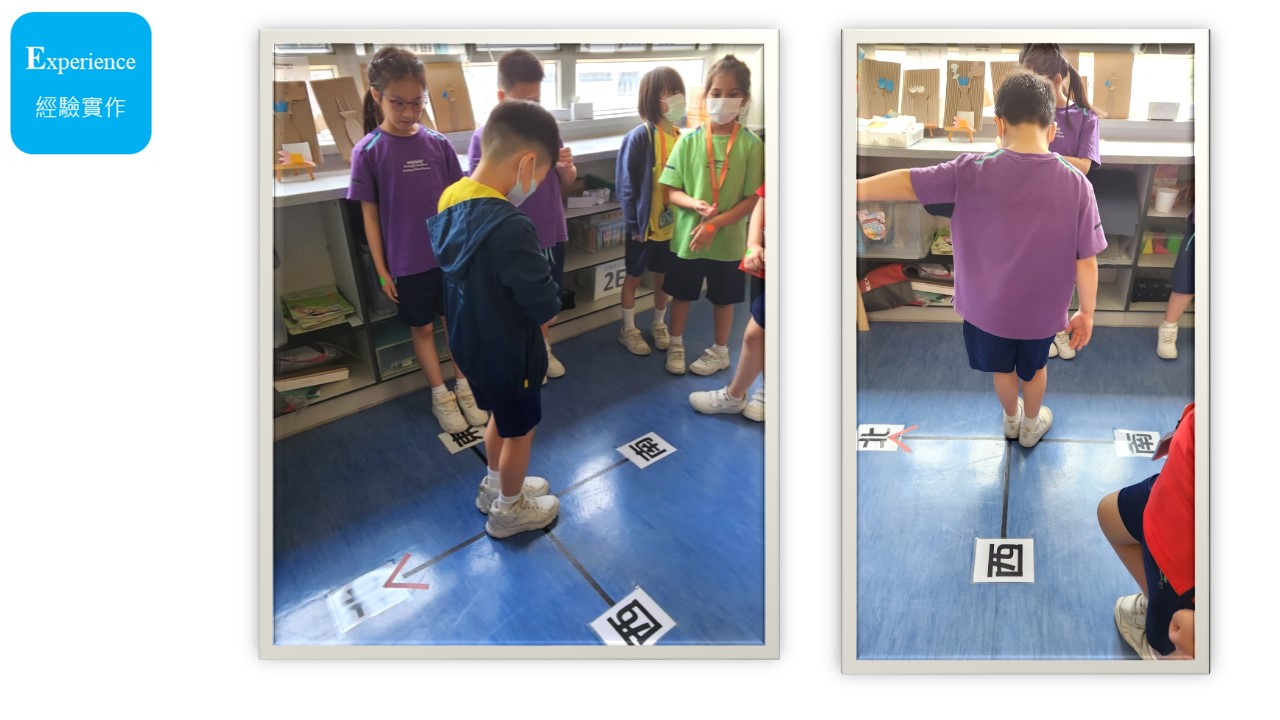
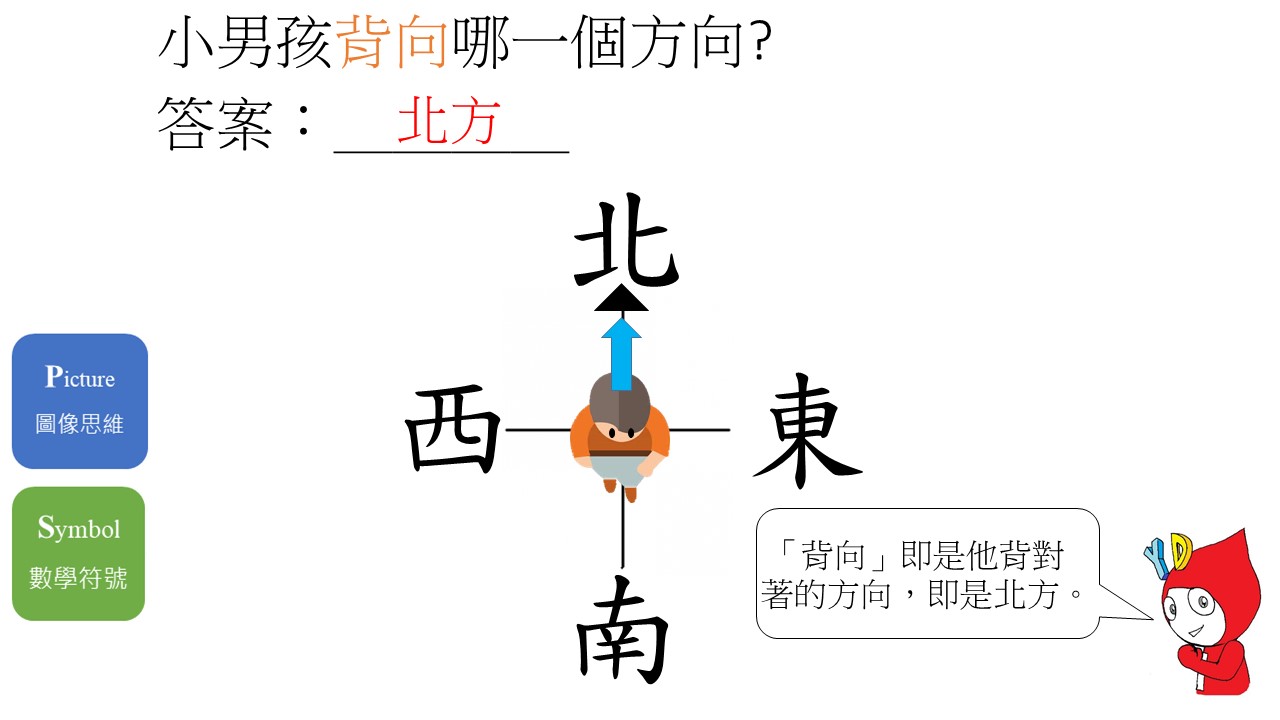
.Placing large directional signs on the classroom floor allows students to physically experience turning and changes in direction. |
.Using pictures and symbols to represent the process of changing directions. |
|
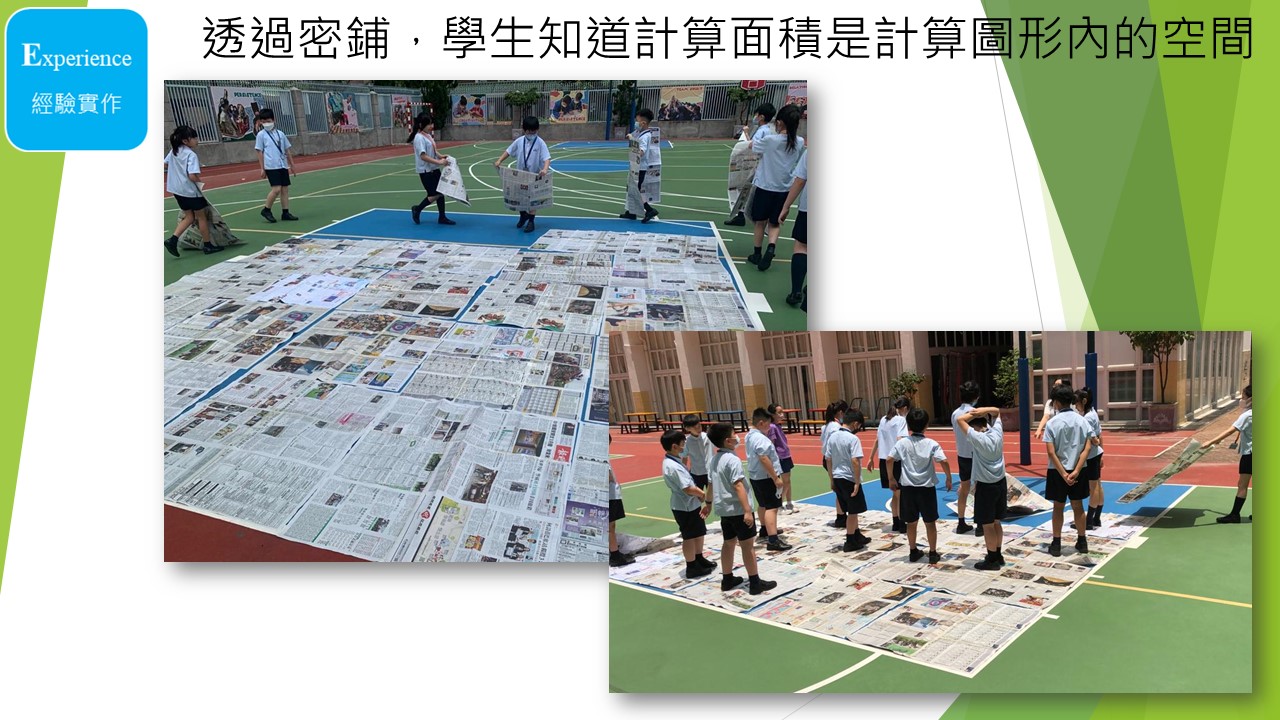
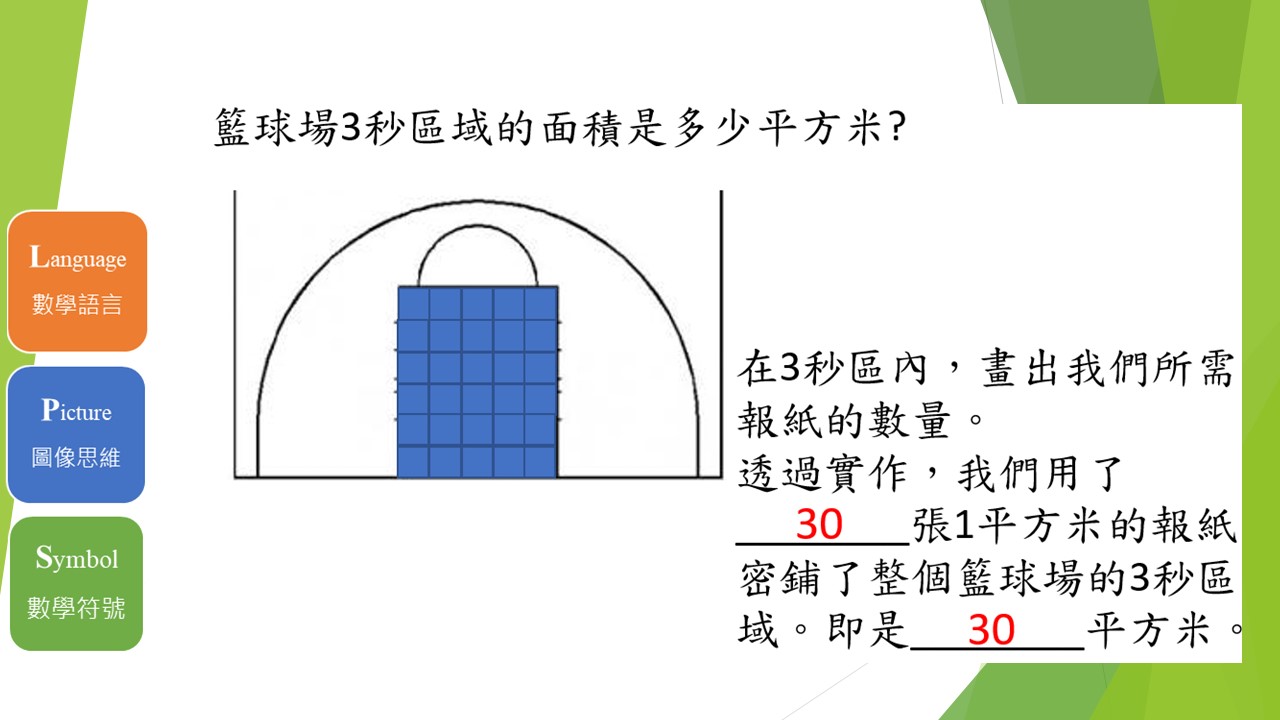
.Laying paper on the basketball court helps students practically grasp the concept of area. |
. Using pictures and symbols to represent area. |
|
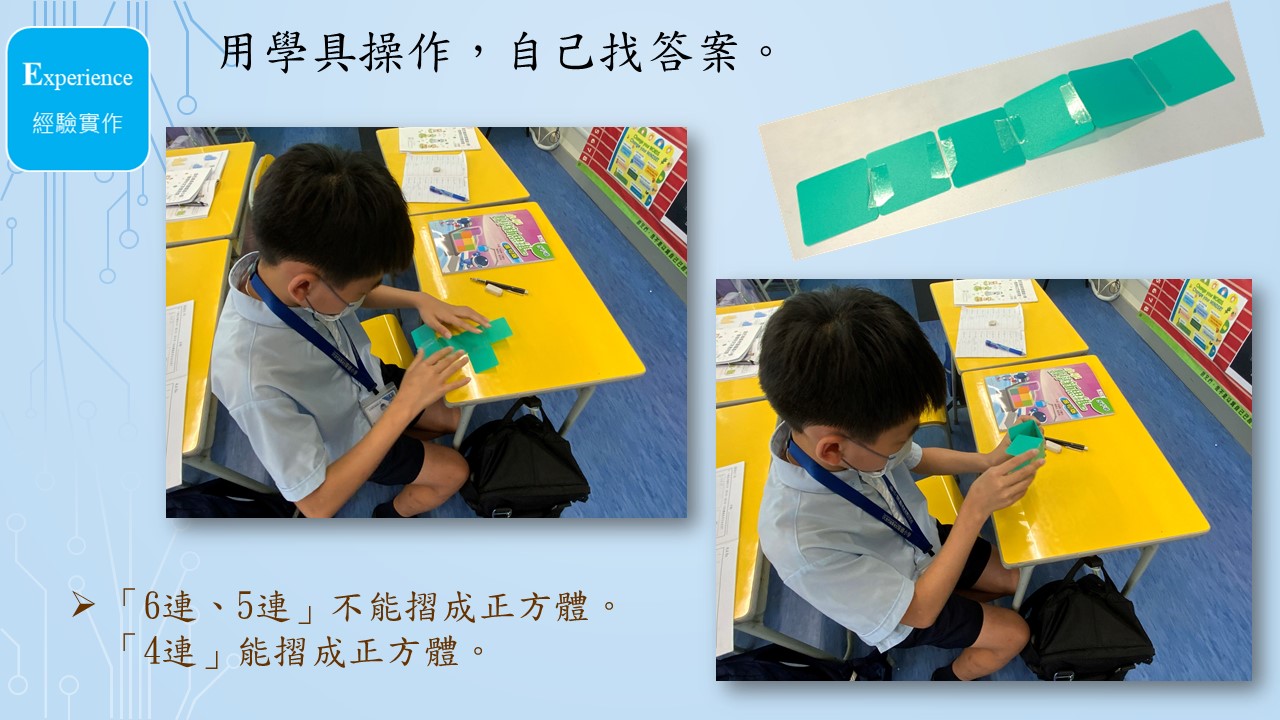
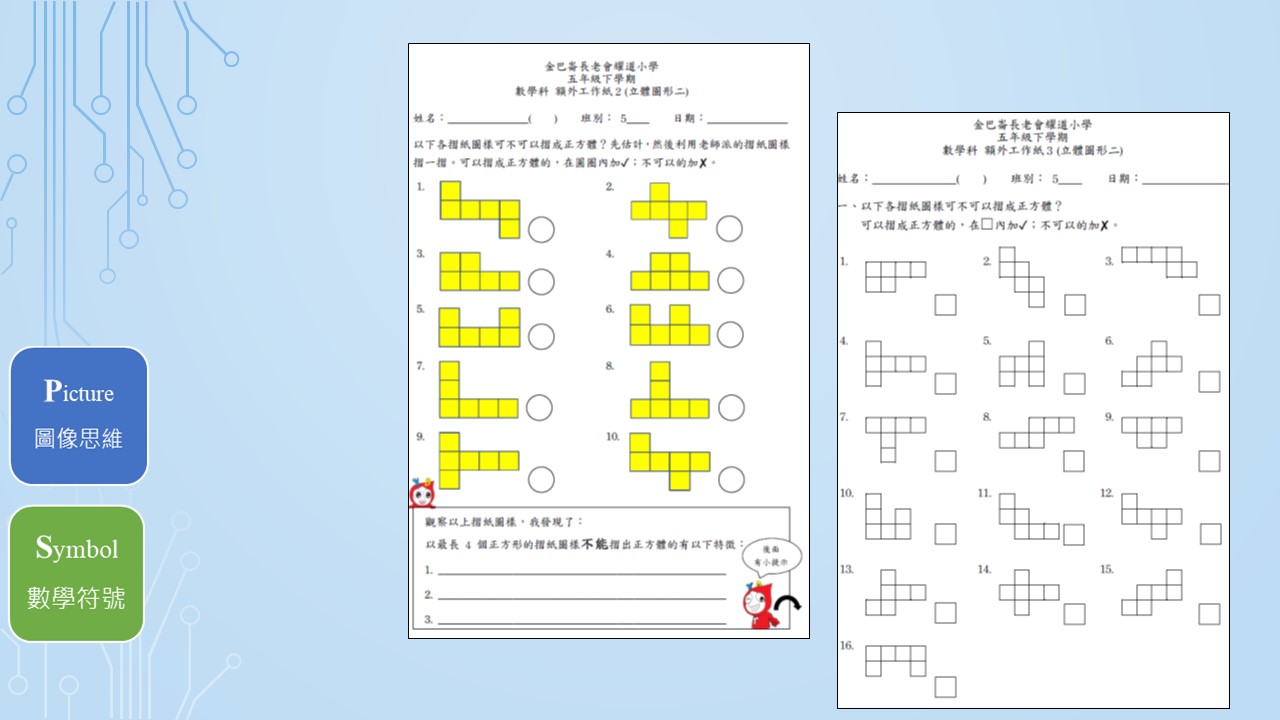
.Using learning tools to explore and identify the characteristics of paper nets that can and cannot be folded into a cube. |
.Using pictures and symbols to represent different structures. |
Students learn concretely and build strong mathematical concepts through the hands-on operation of physical manipulatives.
|
|
|
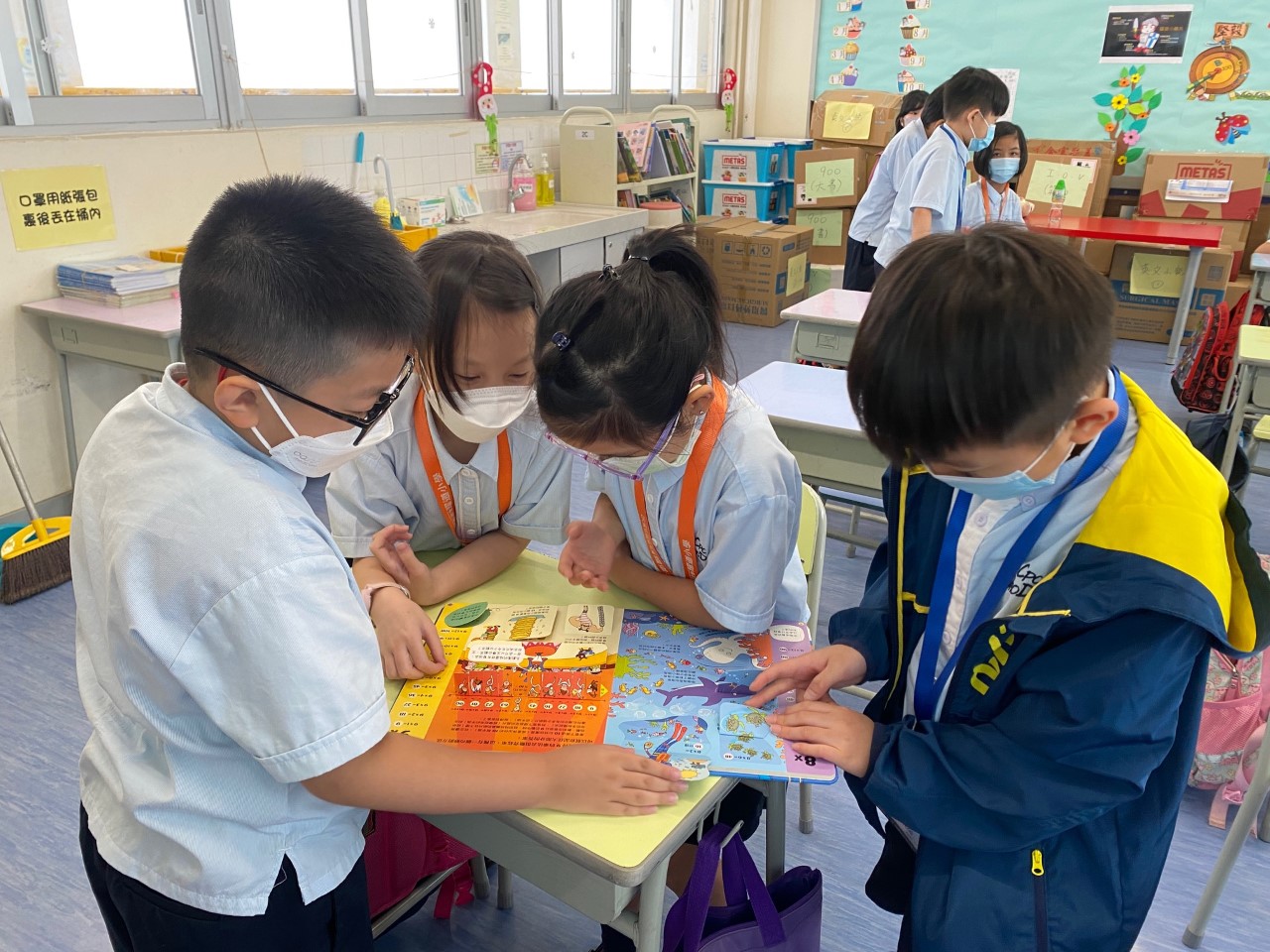
In junior primary classes, mathematics teachers conduct guided reading of math-related books during lessons. These books serve to introduce new knowledge or consolidate existing concepts, thereby cultivating students' reading abilities and interest in mathematics.
|
|
|
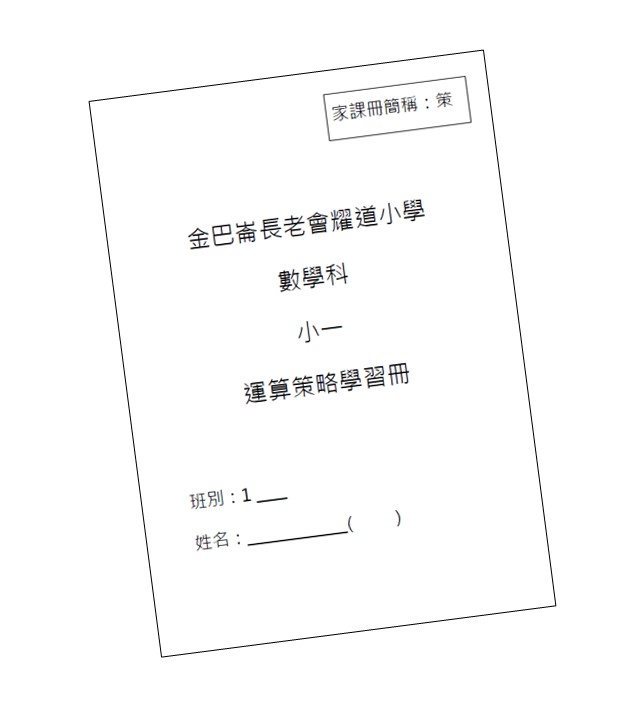
Learning units are equipped with school-based teaching materials and homework tailored to students' specific needs, effectively facilitating and consolidating their learning.
|
|
|
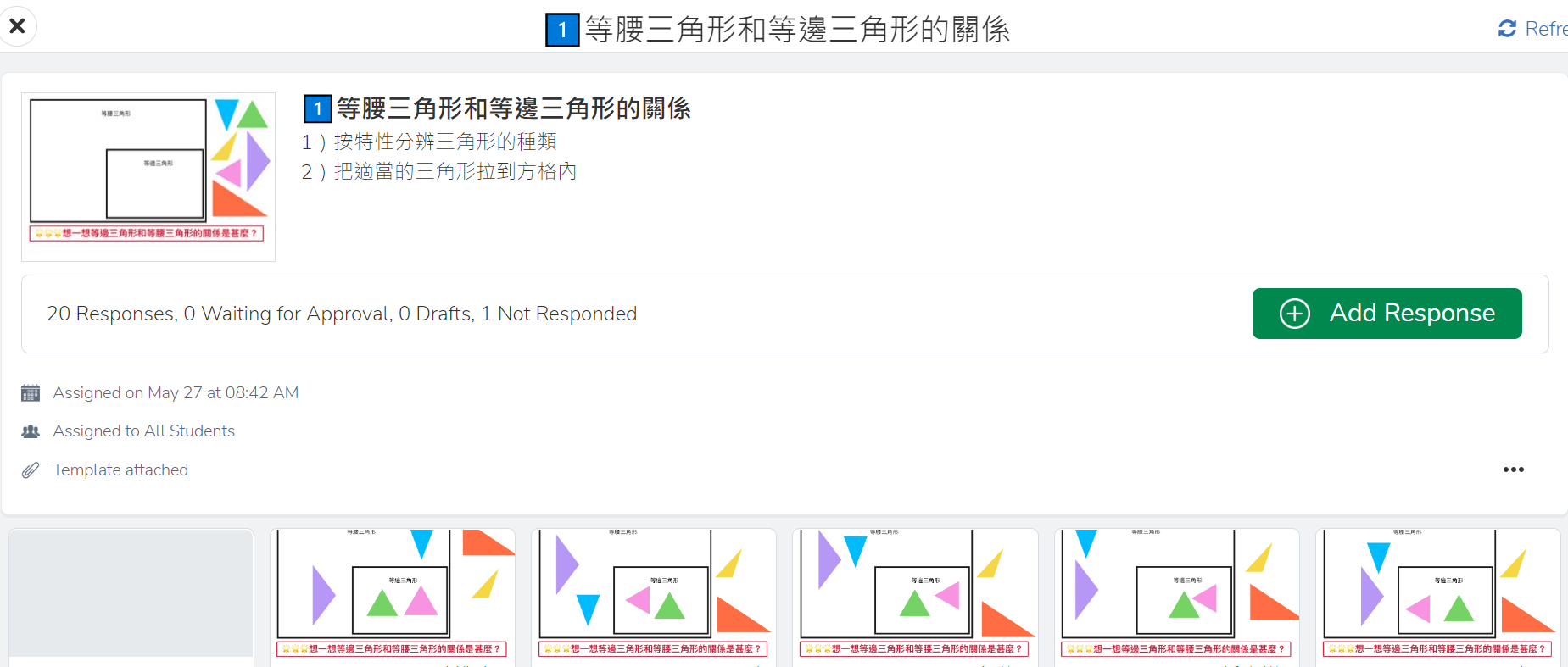
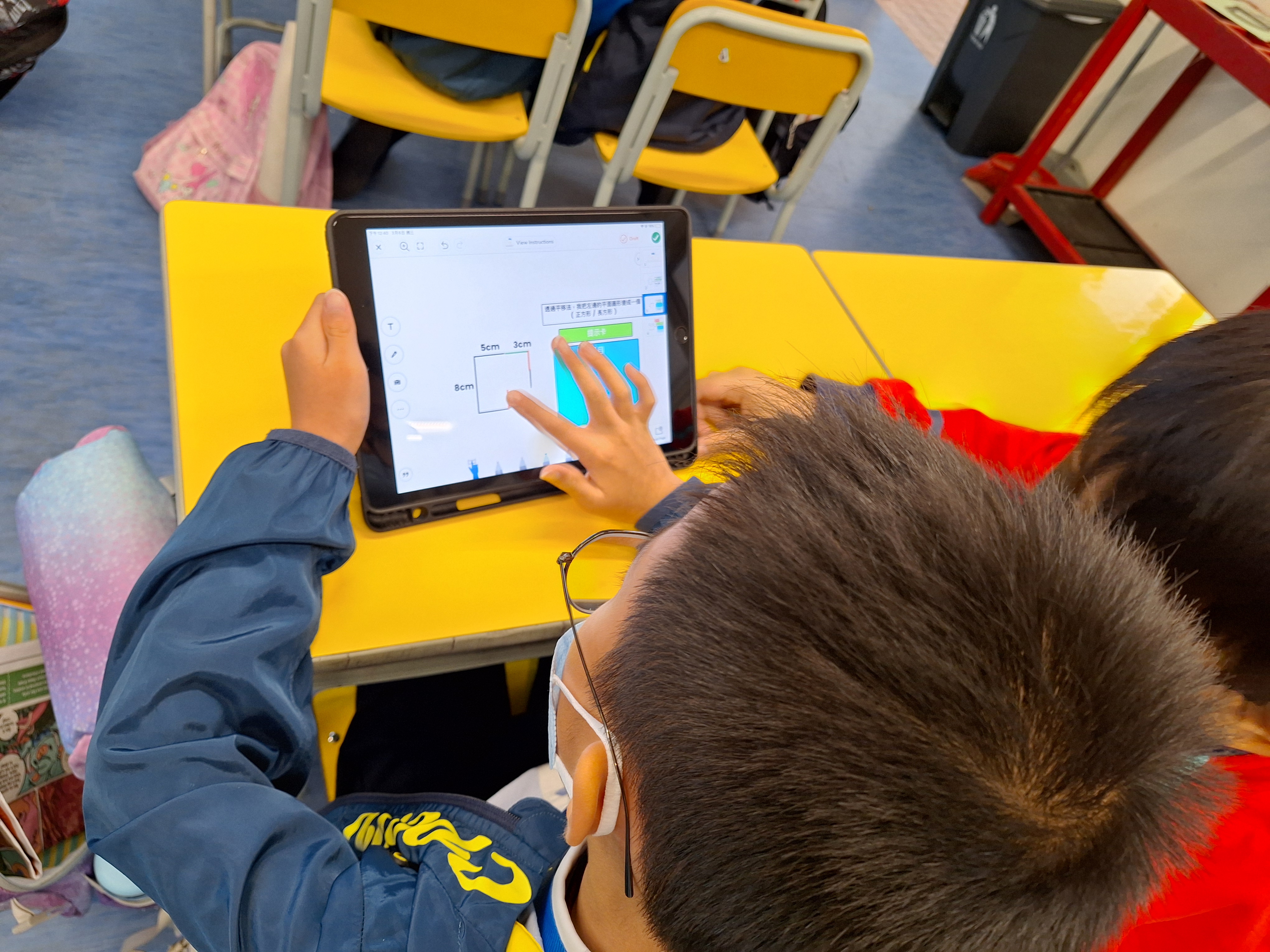
Tablet computers are utilized for e-learning. To increase the interactivity of learning, students regularly complete online assignments, such as unit exercises on the mathematics self-learning platform "KooBits" and the "Self-Directed Learning and Diagnostic System 2.0" platform. They also engage with enrichment worksheets, short videos, and other learning materials distributed via Seesaw.
|
|
|